Starmer vs Trump: Iran Stance Strains US-UK Special Relationship
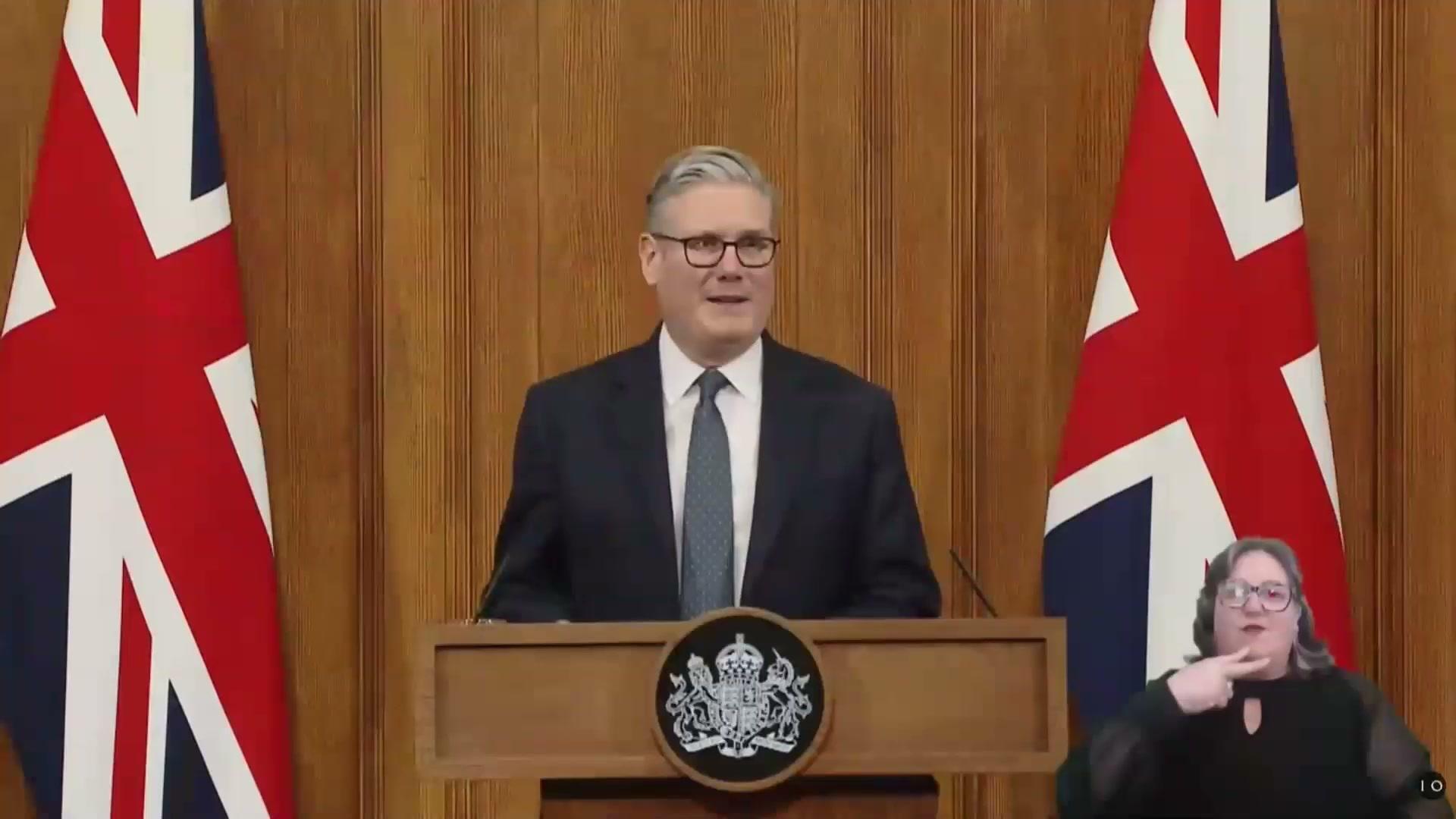
The venerable "special relationship" between the United States and the United Kingdom, a cornerstone of Western diplomacy for decades, is once again facing a significant test. At the heart of this current friction lies a stark divergence in strategy regarding Iran, creating a compelling `starmer trump response` dynamic that reverberates across the Atlantic. UK Prime Minister Keir Starmer has taken a principled stand against a broader military intervention in Iran, drawing sharp criticism from former U.S. President Donald Trump, who has publicly questioned Britain's cooperation and Starmer's leadership. This disagreement over a critical geopolitical flashpoint not only highlights differing approaches to international law and military engagement but also probes the very nature and resilience of the transatlantic bond.
The "Special Relationship" Under Scrutiny: A Historical Perspective
The concept of a "special relationship" was famously articulated by Winston Churchill in 1946, describing a bond forged by common language, shared democratic values, military cooperation, and cultural affection. Over the decades, this unique alliance has been bolstered by close personal friendships between leaders, such as Margaret Thatcher and Ronald Reagan, or Tony Blair and Bill Clinton, often translating into unified foreign policy efforts. Yet, this "specialness" has never implied complete alignment.
History offers several precedents for periods of significant strain. In 1956, the Suez Crisis saw the U.S. administration under Dwight D. Eisenhower refuse to back Anglo-French-Israeli efforts, ultimately forcing a humiliating withdrawal for Britain and France. A decade later, Prime Minister Harold Wilson resisted immense pressure from Lyndon B. Johnson to commit British troops to the Vietnam War. More recently, Tony Blair's controversial decision to join the U.S.-led invasion of Iraq in 2003, based on what proved to be flawed intelligence, aimed to prevent a rift but ultimately led to profound domestic and international repercussions for Britain. These historical junctures serve as crucial reminders that even the closest allies can, and often do, hold divergent strategic interests and moral convictions. The current `starmer trump response` on Iran now adds another chapter to this complex history.
Starmer's Principled Stand: Legality and Limited Engagement
At the core of the current transatlantic tension is Keir Starmer's unequivocal position on the conflict with Iran. The UK Prime Minister has maintained that a broader war in Iran is "illegal" and has firmly stated his government's belief against "regime change from the skies." This stance is not merely rhetoric but is underpinned by a cautious and conditional approach to military cooperation. While Starmer has allowed the U.S. military to utilize two British bases for operations, this permission comes with a significant caveat: it is strictly limited to targeting Iranian missile sites, demonstrating a desire to de-escalate rather than broaden the conflict.
This nuanced position signals a potentially more independent and legally stringent foreign policy for the UK, moving away from past instances of perceived automatic alignment with U.S. military endeavors. It reflects a considered judgment based on international law and a pragmatic assessment of the potential for regional destabilization. Spain's Pedro Sanchez has echoed a similar sentiment, stating his policy with a succinct "no to war," further illustrating a European inclination towards de-escalation rather than engagement. Starmer's approach is designed to balance the UK's commitment to its alliance with the U.S. with its own sovereign assessment of legality and strategic wisdom. For more on the specifics of this defiance, see
Keir Starmer's Iran War Stance: Defying Trump, Shaking Ties.
Trump's Retort and the "Not Churchill" Accusation
Donald Trump’s reaction to Starmer’s stance has been characteristically blunt and direct. Publicly calling Britain "uncooperative" and lambasting Starmer as "not Winston Churchill," Trump's comments cut to the very heart of the "special relationship." The comparison to Churchill is particularly potent, evoking the image of a wartime leader who forged an unshakeable alliance with the U.S. during its darkest hour. To imply Starmer falls short of this iconic standard is a powerful rhetorical tool designed to question his leadership and commitment to the transatlantic bond.
Trump's frustration stems from a desire for unwavering allied support, a hallmark of his "America First" foreign policy where allies are expected to contribute significantly or risk being deemed uncooperative. His anger is not merely performative; it carries potential real-world implications for transatlantic ties. Concerns have been raised within the UK about how Trump's displeasure might impact future trade agreements, intelligence sharing, and overall diplomatic relations. The `starmer trump response` has ignited a debate over whether the UK is weakening its standing on the global stage or merely asserting a more independent posture. The implications of this comparison are further explored in
Trump Calls Starmer 'Not Churchill': A Crisis for UK-US Alliance?.
Navigating Domestic Tensions and Global Ramifications
The disagreement between Starmer and Trump has inevitably spilled over into the UK's domestic political arena. Opposition politicians have been quick to accuse Starmer of jeopardizing Britain’s "special relationship" with the U.S., potentially sidelining the UK at a critical juncture. Media outlets, particularly right-leaning ones, have amplified these criticisms, with headlines like the Daily Mail's "Starmer takes the Great out of Britain" reflecting the sentiment that the Prime Minister's stance diminishes the nation's influence.
Conversely, cabinet ministers like James Murray have defended Starmer, asserting that he is acting with "a cool head" and emphasizing that Britain's relationship with the U.S. remains "historic, long-lasting and deep." This internal debate highlights the delicate balance every leader must strike between national interests, adherence to international law, and the imperatives of alliance diplomacy.
Beyond domestic politics, the `starmer trump response` has broader global ramifications. It sends a signal about the potential fragilities within Western alliances, particularly concerning military interventions and the definition of shared threats. In an increasingly multipolar world, the ability of key democratic allies to navigate disagreements while maintaining a united front against common challenges (like Iranian aggression, cyber threats, or Chinese influence) is paramount. Strong alliances are built not on blind obedience, but on mutual respect, shared strategic dialogue, and the capacity to disagree constructively. A leader’s ability to articulate their nation’s distinct position, even when it diverges from a powerful ally, can ultimately strengthen an alliance by fostering trust and demonstrating principled leadership.
Conclusion
The current standoff between Keir Starmer and Donald Trump over Iran represents more than just a diplomatic spat; it's a profound re-evaluation of the US-UK "special relationship" in the 21st century. Starmer's insistence on legality and limited engagement, set against Trump's expectation of unwavering support, underscores a fundamental difference in strategic philosophy. While Trump's criticism, particularly the "not Churchill" remark, aims to pressure the UK, Starmer’s government appears committed to its independent judgment. This period of strain will undoubtedly test the resilience of the transatlantic bond, potentially shaping future UK foreign policy and its role on the global stage. Ultimately, the way both nations navigate this disagreement will determine whether the "special relationship" can evolve to accommodate diverse perspectives, or if it risks becoming a less potent force in an increasingly complex world.