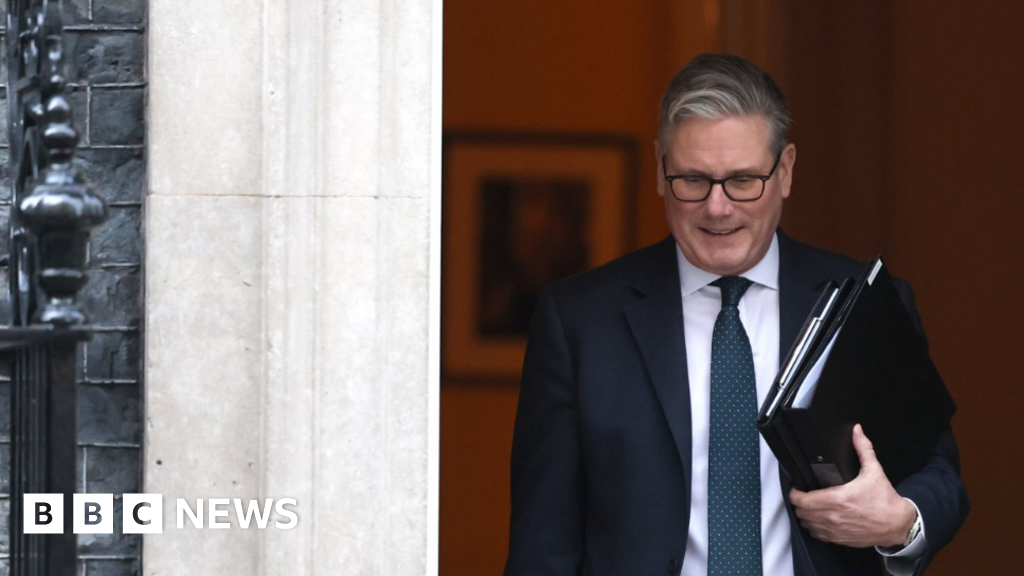
Keir Starmer's Iran Stance: Defying Trump and Redefining Transatlantic Ties
The intricate dance of international diplomacy often sees allies aligning their steps, but recent events have spotlighted a stark divergence between two major Western powers. U.K. Prime Minister Keir Starmer has taken an unwavering stance against a potential war in Iran, directly clashing with the views of U.S. President Donald Trump. This significant difference in foreign policy has ignited a heated debate, questioning the robustness of the long-cherished "special relationship" and forcing a re-evaluation of Britain's role on the global stage. Starmer's principled position, while lauded by many at home, has drawn sharp criticism from Washington, prompting concerns about the future of transatlantic cooperation.
Keir Starmer's Unwavering Position: A Principled Stand Against War
At the heart of the current transatlantic friction lies Prime Minister Keir Starmer's firm conviction regarding military action against Iran. Starmer has consistently maintained that any such conflict would be "illegal," a declaration that firmly anchors his government's policy in international law rather than political expediency. This isn't merely a rhetorical flourish; it represents a foundational belief that dictates his administration's approach to complex geopolitical challenges.
The "no to war" doctrine isn't unique to Starmer; it echoes sentiments expressed by other European leaders, such as Spain's Pedro Sanchez. However, Starmer's application of this principle carries particular weight given the UK's historical military alliance with the U.S. His resolute rejection of "regime change from the skies" underscores a lessons-learned approach, particularly in the aftermath of past interventions that have yielded unforeseen and often tragic consequences. This stance signals a move towards a more cautious and legally-grounded foreign policy, aiming to avoid the pitfalls of unilateral military adventurism.
Despite his strong opposition to offensive war, Starmer has demonstrated a pragmatic willingness to cooperate on defensive measures. He has permitted the U.S. military to utilize two British bases, but with a crucial caveat: their use is strictly limited to hitting Iranian missile sites. This conditional support highlights a delicate balancing act – safeguarding national interests and maintaining strategic alliances, while simultaneously adhering to a core ethical and legal principle. It's a nuanced position that attempts to de-escalate rather than inflame, offering support against direct threats without endorsing broader military aggression.
Trump's Rebuke and the "Not Winston Churchill" Slur
President Donald Trump's reaction to Starmer's independent stance was swift and cutting. Accusing Britain of being "uncooperative," Trump delivered a stinging personal rebuke, declaring Starmer "not Winston Churchill." This comparison is far more than a casual insult; it's a potent historical reference designed to challenge Starmer's leadership and the very foundation of the US-UK relationship. Churchill, a titan of British politics, famously articulated the concept of the "special relationship" in 1946, symbolizing an unbreakable bond forged in shared values and wartime alliance. By implying Starmer falls short of this iconic figure, Trump sought to evoke a sense of betrayal and a perceived weakening of historical ties.
The "not Winston Churchill" remark strikes at the heart of how American presidents often view their British counterparts: as steadfast allies, often expected to align closely with U.S. foreign policy. However, as history shows, the "special relationship" has always been complex, punctuated by both moments of profound unity and significant strain. For more on how this particular criticism impacts the alliance, you can read Trump Calls Starmer 'Not Churchill': A Crisis for UK-US Alliance?
This public criticism has inevitably led to accusations from political opponents that Starmer is sidelining the UK at a critical juncture. Some critics, particularly in right-leaning media, have suggested his stance diminishes Britain's international stature, with one newspaper famously proclaiming, "Starmer takes the Great out of Britain." Such strong reactions underscore the domestic pressures Starmer faces, balancing principled foreign policy with perceptions of national strength and influence.
Navigating the "Special Relationship": Past Precedents and Future Uncertainties
The U.S.-UK "special relationship," characterized by a common language, shared interests, military cooperation, and cultural affection, has endured through decades of geopolitical shifts. Yet, it has never been without its periods of intense strain. Examining historical precedents offers valuable context for the current friction:
- The Suez Crisis (1956): When Britain, France, and Israel attempted to seize the Suez Canal, U.S. President Dwight D. Eisenhower’s administration refused to back the effort and threatened sanctions, forcing a humiliating withdrawal. This served as a stark reminder of Britain's waning power and American ascendancy.
- The Vietnam War (1960s): British Prime Minister Harold Wilson resisted immense pressure from U.S. President Lyndon B. Johnson to commit British troops to the Vietnam War, maintaining an independent foreign policy despite the close alliance.
- The Iraq War (2003): In contrast, Prime Minister Tony Blair famously aligned with U.S. President George W. Bush in the invasion of Iraq, seeking to avoid a rift similar to previous disagreements. This decision, based on ultimately faulty intelligence, remains one of the most controversial in recent British history, highlighting the high stakes of alliance solidarity.
These historical episodes demonstrate that disagreements, even fundamental ones, are an inherent part of the special relationship's fabric. Starmer's refusal to fully commit to a U.S.-led intervention in Iran can be seen as another chapter in this complex history, potentially drawing lessons from the costly Iraq War decision. Cabinet Minister James Murray has reiterated that the relationship remains "historic, long-lasting and deep," implying that isolated disagreements do not fundamentally undermine the alliance.
However, the modern challenges to transatlantic bonds are multifaceted. Beyond military alignment, issues like trade deals, climate policy, and technological competition demand careful navigation. The current Starmer vs Trump: Iran Stance Strains US-UK Special Relationship episode serves as a powerful reminder that while shared history provides a foundation, contemporary leaders must actively forge common ground amidst evolving global priorities.
Beyond the Rhetoric: Economic and Geopolitical Repercussions
The diplomatic friction between Starmer and Trump extends beyond mere words, carrying potential economic and geopolitical repercussions. A strained relationship with the U.S. could complicate future trade negotiations, a vital consideration for the UK post-Brexit. While Starmer has reportedly cultivated surprisingly cordial relations with Trump in other contexts, a fundamental disagreement on a major foreign policy issue could erode diplomatic leverage and slow progress on shared economic agendas.
From a geopolitical standpoint, Starmer's independent stance projects a stronger image of the UK's commitment to an independent foreign policy. By refusing to blindly follow a U.S. line, Britain demonstrates its capacity to make sovereign decisions based on its own assessment of international law and national interest. This could be viewed positively by other European nations and global partners seeking a more multilateral approach to international relations. However, it also risks being perceived as a weakening of Western unity at a time of significant global instability, especially following an Iranian-made drone strike on a British air force base in Cyprus, which, while causing no injuries, underscored the regional tensions.
For leaders navigating such complex scenarios, practical advice often centers on robust communication, clear articulation of national interests, and the exploration of alternative diplomatic avenues. Starmer's approach, described as acting with "a cool head," emphasizes de-escalation and diplomatic solutions over military confrontation, offering a different model for engaging with global threats.
Conclusion
Keir Starmer's defiance of Donald Trump over a potential war in Iran marks a pivotal moment in US-UK relations. While Trump's "not Winston Churchill" criticism seeks to frame Starmer's position as a betrayal of historical ties, Starmer's government champions a principled stance rooted in international law and a cautious approach to military intervention. This episode underscores the enduring complexity of the "special relationship," demonstrating its capacity for both profound alignment and significant disagreement. As global dynamics continue to shift, the Starmer-Trump dynamic serves as a powerful reminder that even the strongest alliances must continually adapt, balancing shared interests with sovereign decision-making in the pursuit of peace and security.